 English

 New Born
 Moms
Moms
 Fashion
 Games
Games
 Vehicles Toys
 Activity Toys
 Wooden Toys
 Dolls
Dolls
 Learning & Education Toys
 Guns
Guns
 Construction

Learning & Educational Toys: Building Bright Minds Through Play
Share




Learning & Educational Toys: Building Bright Minds Through Play
Learning & Educational To...
Author
 Employee
Posted
Jun 28, 2026 00:00 AMIntroduction
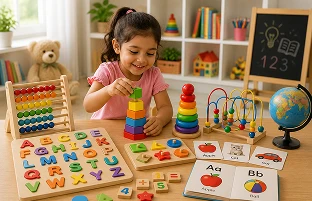
Play is one of the most effective ways children learn about the world around them. While every toy offers some level of entertainment, learning and educational toys are specially designed to stimulate curiosity, encourage creativity, and support a child's cognitive, physical, and emotional development. From alphabet puzzles and counting games to science kits and STEM building sets, educational toys transform everyday play into meaningful learning experiences.
Unlike passive forms of entertainment, educational toys actively engage children in thinking, exploring, experimenting, and solving problems. These toys help build essential skills such as communication, memory, concentration, hand-eye coordination, creativity, and logical reasoning while keeping children entertained.
Parents and educators increasingly choose educational toys because they promote lifelong learning habits in a fun and interactive way. This guide explains how learning and educational toys contribute to healthy child development and how to choose the best options for every age group.
What Are Learning & Educational Toys?
Learning and educational toys are designed to help children develop important skills while they play. These toys encourage exploration, imagination, and hands-on learning instead of passive entertainment.
Popular educational toys include:
- Alphabet puzzles
- Number learning games
- Shape sorters
- Building blocks
- STEM construction kits
- Science experiment sets
- Flash cards
- Memory games
- Musical instruments
- Art and craft kits
Each toy introduces new concepts while making learning enjoyable and engaging.
Benefits of Learning & Educational Toys
Educational toys provide numerous developmental advantages that support children both at home and in school.
Encourages Cognitive Development
Many educational toys challenge children to think, observe, compare, and solve problems. Activities such as matching shapes, solving puzzles, and building structures strengthen critical thinking and logical reasoning.
Children also improve:
- Memory
- Attention span
- Pattern recognition
- Decision-making skills
- Analytical thinking
These abilities form the foundation for future academic success.
Develops Creativity and Imagination
Open-ended educational toys encourage children to invent stories, build imaginative creations, and express their ideas freely.
Whether drawing, building with blocks, conducting pretend science experiments, or designing creative projects, children learn to think independently while exploring their imagination.
Creative play helps develop:
- Innovation
- Storytelling
- Artistic expression
- Flexible thinking
- Confidence in solving challenges
Supports Language and Communication Skills
Educational toys often encourage children to speak, ask questions, explain ideas, and interact with others.
Examples include:
- Alphabet games
- Storytelling cards
- Reading puzzles
- Flash cards
- Interactive learning books
These activities help expand vocabulary, improve pronunciation, strengthen listening skills, and encourage meaningful conversations with parents, teachers, and friends.
Improves Fine Motor Skills
Many educational toys require children to grasp, stack, arrange, twist, draw, or connect objects carefully.
Examples include:
- Building blocks
- Peg boards
- Lacing toys
- Shape sorters
- Art supplies
- Puzzle pieces
These activities strengthen hand muscles, improve finger control, and develop hand-eye coordination—important skills for writing, drawing, and everyday tasks.
Introduces STEM Learning
STEM (Science, Technology, Engineering, and Mathematics) toys prepare children for future learning through fun and practical experiences.
Popular STEM toys include:
- Building sets
- Robotics kits
- Engineering projects
- Coding games
- Science experiment kits
- Magnetic construction toys
These activities teach children to observe, experiment, test ideas, and solve problems while developing curiosity about how things work.
Choosing Educational Toys by Age
Selecting toys that match a child's developmental stage helps maximize learning and enjoyment.
Ages 1–3 Years
Recommended toys include:
- Shape sorters
- Stacking rings
- Alphabet blocks
- Soft puzzles
- Musical toys
These toys help develop sensory awareness, coordination, and early recognition skills.
Ages 3–5 Years
Ideal choices include:
- Counting games
- Alphabet puzzles
- Pretend play sets
- Wooden blocks
- Art and craft kits
Children begin developing language, creativity, and early mathematics through interactive play.
Ages 5–8 Years
Older children enjoy:
- STEM building kits
- Science experiment sets
- Educational board games
- Geography puzzles
- Coding toys
These toys strengthen logical thinking, problem-solving, and teamwork.
Ages 8 Years and Above
Recommended educational toys include:
- Robotics kits
- Engineering projects
- Advanced science kits
- Strategy games
- Programming and coding activities
These options prepare children for more advanced learning while encouraging independent thinking.
Tips for Choosing the Best Educational Toys
When shopping for learning toys, consider these helpful tips:
- Choose age-appropriate products.
- Focus on toys that encourage active participation.
- Select durable, child-safe materials.
- Encourage open-ended creative play.
- Balance educational value with entertainment.
- Look for toys that can grow with your child.
- Purchase from trusted brands with strong safety standards.
Quality educational toys provide years of meaningful learning experiences.
Why Play-Based Learning Matters
Children naturally learn best through play because it keeps them motivated, curious, and engaged.
Play-based learning helps children:
- Build confidence
- Improve social interaction
- Develop independence
- Strengthen problem-solving abilities
- Learn through exploration
- Enjoy learning without pressure
By making education enjoyable, children develop a lifelong love of learning that extends beyond the classroom.
Frequently Asked Questions
What are educational toys?
Educational toys are designed to teach children important skills such as problem-solving, language, creativity, mathematics, science, and motor development while they play.
Are educational toys suitable for toddlers?
Yes. Many educational toys are specifically designed for toddlers, including shape sorters, stacking toys, musical instruments, and sensory learning activities.
How do educational toys help children learn?
They encourage hands-on exploration, critical thinking, creativity, communication, and independent learning through fun and engaging activities.
Are STEM toys considered educational toys?
Absolutely. STEM toys help children explore science, technology, engineering, and mathematics while improving analytical thinking and problem-solving skills.
Conclusion
Learning and educational toys are powerful tools that help children develop essential life skills while enjoying meaningful play. From improving creativity and communication to strengthening STEM knowledge and problem-solving abilities, these toys support every stage of a child's growth and development.
Whether your child enjoys puzzles, science kits, building blocks, art supplies, or educational games, choosing high-quality learning toys creates exciting opportunities for exploration and discovery. By investing in educational toys today, parents can nurture curiosity, inspire confidence, and help children build bright minds through the joy of play.
Share