 English

 New Born
 Moms
Moms
 Fashion
 Games
Games
 Vehicles Toys
 Activity Toys
 Wooden Toys
 Dolls
Dolls
 Learning & Education Toys
 Guns
Guns
 Construction

How Dolls Help Build Social and Emotional Skills in Children
Share




How Dolls Help Build Social and Emotional Skills in Children
Dolls
Author
 Employee
Posted
Jun 28, 2026 00:00 AMIntroduction
Dolls have been cherished companions for children for generations, offering much more than simple entertainment. Whether it's a baby doll, fashion doll, plush doll, or cultural doll, these toys play an important role in a child's emotional, social, and cognitive development. Through imaginative play, children create stories, express emotions, and learn valuable life skills that prepare them for real-world interactions.
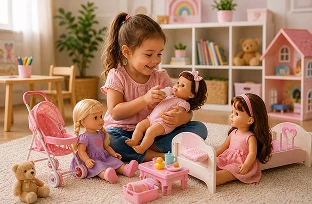
Playing with dolls allows children to imitate everyday situations such as caring for a baby, comforting a friend, or working together as a family. These role-playing experiences help children understand emotions, develop empathy, improve communication, and build confidence. As children interact with dolls, they also strengthen their creativity and problem-solving abilities in a safe and enjoyable environment.
This guide explores how dolls contribute to healthy child development and why they remain one of the most valuable educational toys for growing minds.
Why Dolls Are More Than Just Toys
Dolls encourage children to explore relationships, emotions, and everyday experiences through pretend play. Unlike many electronic toys, dolls rely on imagination, allowing children to create unique stories and scenarios.
Whether children pretend to feed a baby doll, dress a fashion doll, or care for a family of dolls, they are learning important emotional and social behaviors while having fun.
Doll play helps children:
- Express feelings safely
- Build confidence
- Develop communication skills
- Learn responsibility
- Encourage creative storytelling
- Strengthen emotional understanding
Builds Emotional Intelligence
One of the greatest benefits of dolls is their ability to help children recognize and manage emotions.
Children naturally project feelings onto their dolls. They comfort them when they are "sad," celebrate with them when they are "happy," and care for them when they are "sick." These role-playing activities teach children how emotions work and how to respond with kindness and understanding.
By practicing empathy during play, children become more aware of other people's feelings and learn how to express their own emotions in healthy ways.
Encourages Empathy and Compassion
Pretending to care for a doll helps children understand the importance of kindness, patience, and compassion.
Simple activities such as:
- Feeding a doll
- Putting a doll to sleep
- Changing doll clothes
- Comforting an upset doll
- Taking a doll to an imaginary doctor
teach children nurturing behaviors that strengthen empathy and emotional awareness.
These caring habits often carry over into real-life relationships with siblings, friends, and family members.
Improves Social Skills
Doll play encourages children to communicate and interact with others during imaginative games.
When children play together with dolls, they practice:
- Sharing
- Taking turns
- Listening
- Cooperation
- Problem-solving
- Respecting different ideas
These experiences help children become more confident in group settings and improve their ability to build positive friendships.
Develops Communication and Language Skills
Children often talk to their dolls as if they were real people. They create conversations, ask questions, explain situations, and tell stories.
This type of pretend play naturally improves:
- Vocabulary
- Sentence formation
- Listening skills
- Storytelling
- Verbal confidence
- Creative expression
Parents and caregivers can join doll play by asking questions and encouraging children to describe their stories, making language development even more engaging.
Encourages Creativity and Imagination
Dolls have no fixed storyline, allowing children to invent endless adventures and scenarios.
A doll might become:
- A doctor
- A teacher
- A firefighter
- A parent
- A superhero
- A traveler
- A chef
- A student
These imaginative experiences inspire creative thinking while helping children explore different roles, responsibilities, and careers.
Creative play also improves problem-solving by encouraging children to find solutions within their imaginary stories.
Builds Confidence and Independence
Doll play allows children to make decisions independently.
They choose:
- What the doll will wear
- Where the doll will go
- How the story develops
- What problems need solving
Making these choices helps children develop decision-making skills while building confidence in their own abilities.
As children successfully complete pretend caregiving tasks, they gain a sense of responsibility and accomplishment.
Choosing the Right Doll by Age
Selecting age-appropriate dolls ensures children enjoy safe and meaningful play experiences.
Ages 1–3 Years
Recommended dolls include:
- Soft plush dolls
- Fabric baby dolls
- Large lightweight dolls
- Washable dolls
Ages 3–5 Years
Children enjoy:
- Baby dolls
- Dress-up dolls
- Family doll sets
- Doll accessories
- Pretend care kits
Ages 5 Years and Above
Older children often prefer:
- Fashion dolls
- Career-themed dolls
- Collectible dolls
- Dollhouses
- Cultural dolls
- Interactive dolls
Choosing dolls that match a child's interests encourages longer and more engaging play sessions.
Tips for Choosing Quality Dolls
When shopping for dolls, consider these important factors:
- Select age-appropriate designs.
- Choose dolls made from child-safe, non-toxic materials.
- Look for durable construction and washable fabrics.
- Encourage diversity by choosing dolls with different appearances, cultures, and careers.
- Select accessories that inspire imaginative role-play without being overly complicated.
Quality dolls provide years of enjoyable and educational play.
Frequently Asked Questions
Are dolls beneficial for both boys and girls?
Yes. Doll play supports empathy, communication, creativity, and emotional development for all children, regardless of gender.
How do dolls help emotional development?
Children practice expressing feelings, understanding emotions, and caring for others through imaginative caregiving and storytelling activities.
Can dolls improve language skills?
Yes. Talking to dolls, creating conversations, and telling stories help children expand vocabulary, improve communication, and strengthen storytelling abilities.
What type of doll is best for toddlers?
Soft fabric dolls or large baby dolls with no small detachable parts are ideal for toddlers because they are safe, lightweight, and easy to handle.
Conclusion
Dolls are far more than simple toys—they are valuable learning tools that help children develop empathy, communication, creativity, confidence, and emotional intelligence. Through imaginative role-playing, children explore relationships, practice problem-solving, and learn important social skills that prepare them for everyday life.
Whether caring for a baby doll, creating adventures with a fashion doll, or sharing stories with friends, doll play encourages meaningful learning in a fun and engaging way. By choosing high-quality, age-appropriate dolls, parents can support their child's emotional growth while creating joyful memories filled with imagination, kindness, and confidence.
Share