 English

 New Born
 Moms
 Fashion
 Games
 Vehicles Toys
 Activity Toys
 Activity Toys
 Wooden Toys
 Dolls
 Learning & Education Toys
 Guns

Why Wooden Toys Remain a Favourite for Creative Play
Share




Why Wooden Toys Remain a Favourite for Creative Play
Wooden Toys
Author
 Carz N Dollz
Posted
Oct 16, 2026 00:00 AMWhy Wooden Toys Remain a Favourite for Creative Play
Toys play an important role in making childhood enjoyable, imaginative, and full of discovery. Among the many options available today, wooden toys continue to attract parents looking for simple, engaging, and versatile play experiences. From wooden building blocks and puzzles to pretend-play sets and educational toys, these products offer children opportunities to explore, create, and learn through hands-on activities. Choosing suitable wooden toys can make playtime more meaningful while encouraging curiosity and independent thinking.
What Makes Wooden Toys Special?
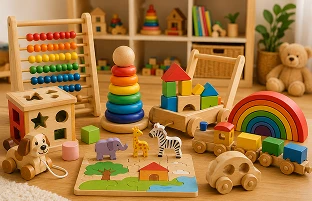
Wooden toys offer a simple and tactile play experience that encourages children to interact directly with the objects around them. Their solid construction, natural textures, and often straightforward designs can inspire children to create their own games rather than follow a single set of instructions.
Many wooden toys support open-ended play, allowing children to build structures, arrange pieces, explore shapes, and invent imaginative scenarios. Depending on the design, they can also encourage coordination, concentration, and problem-solving.
Wooden Building Blocks for Creative Exploration
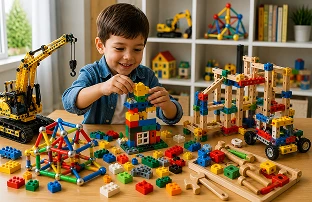
Wooden building blocks are versatile toys that allow children to experiment with shapes, sizes, balance, and structure. Children can stack blocks, create towers, build simple houses, or invent their own designs using the same set of pieces.
As children become more confident, they may begin building more complex structures and finding different ways to use the same blocks. This flexibility makes building toys suitable for a wide range of imaginative activities.
Wooden Puzzles for Problem-Solving Skills
Wooden puzzles provide children with opportunities to recognise shapes, identify patterns, and understand how individual pieces fit together. Simple shape-fitting puzzles can help younger children explore basic forms, while more complex designs can challenge older children to think carefully and plan their next move.
Completing puzzles can encourage concentration, patience, and logical thinking. Children may also develop hand-eye coordination as they pick up, rotate, and position each piece.Choose puzzles that match your child's developmental stage, offering enough challenge to maintain interest without making the activity unnecessarily difficult.
Wooden Pretend-Play Toys for Imagination
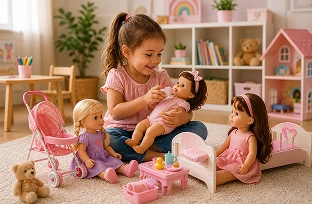
Pretend-play toys allow children to recreate familiar experiences and invent their own stories. Wooden kitchen sets, toy vehicles, miniature furniture, and role-play accessories can provide inspiration for imaginative games.
Through pretend play, children can explore everyday situations, practise communication, and experiment with different roles. Playing with siblings or friends can also create opportunities to share ideas, cooperate, and take turns.
Educational Wooden Toys for Early Learning
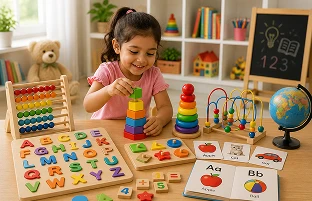
Many wooden toys introduce early learning concepts through interactive activities. Counting boards, alphabet puzzles, shape sorters, and stacking toys can help children become familiar with numbers, letters, colours, and patterns.
These activities make learning more hands-on by allowing children to move, arrange, and compare physical objects. For example, counting pieces can introduce basic number recognition, while shape sorters encourage children to identify differences between forms.
Check the Quality and Safety of Wooden Toys
Before buying wooden toys, examine their construction, surface finish, paint, and age recommendations. Choose products with smooth surfaces, securely attached components, and finishes intended for children's toys.
For younger children, avoid toys with small parts that could present a choking hazard. Check that paints, coatings, and materials meet applicable toy-safety requirements, and follow the manufacturer's cleaning and maintenance instructions.
Make Wooden Toys Part of Everyday Playtime
Wooden toys can fit naturally into everyday play by offering children opportunities to build, sort, imagine, and experiment. Rotating toys occasionally can help renew children's interest and encourage them to discover different ways to use familiar objects.
Parents and caregivers can participate by suggesting simple challenges, asking open-ended questions, or joining pretend-play activities. At the same time, allowing children to explore independently gives them room to develop their own ideas.
Share