 English

 New Born
 Moms
 Fashion
 Games
 Vehicles Toys
 Activity Toys
 Activity Toys
 Wooden Toys
 Dolls
 Learning & Education Toys
 Guns

Making Learning Fun with Educational Toys for Children
Share




Making Learning Fun with Educational Toys for Children
Educational Toys
Author
 Carz N Dollz
Posted
Oct 16, 2026 00:00 AMMaking Learning Fun with Educational Toys for Children
Children are naturally curious about the world around them, and play offers valuable opportunities to explore new ideas and develop essential skills. Learning toys make these experiences more engaging by combining interactive activities with age-appropriate educational concepts. From alphabet puzzles and counting games to science kits and interactive learning sets, there are many options to suit different ages and interests. Choosing suitable learning toys can help children explore new concepts while making everyday playtime enjoyable and meaningful.
Why Learning Toys Matter for Child Development
Learning toys encourage children to discover concepts through hands-on activities rather than relying only on observation or instructions. Matching shapes, identifying colours, counting objects, and solving simple puzzles can introduce foundational skills through enjoyable play.
Depending on their design, educational toys can support memory, concentration, language development, coordination, and logical thinking. They also give children opportunities to practise skills repeatedly at their own pace.
Alphabet and Number Toys for Early Learning
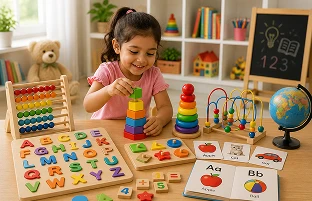
Alphabet and number toys can introduce young children to letters, sounds, counting, and basic numerical concepts. Alphabet puzzles, counting boards, number blocks, and matching cards provide interactive ways to become familiar with these foundational skills.
For example, children can practise recognising letters by matching them to corresponding pieces or explore counting by arranging objects in groups. These activities can help make abstract concepts easier to understand through visual and physical interaction.
Puzzle Toys for Memory and Logical Thinking
Puzzles provide children with opportunities to observe details, recognise patterns, and work towards completing a task. Shape puzzles, matching games, and age-appropriate logic activities can encourage concentration and analytical thinking.
As children explore different solutions, they learn to compare options and adjust their approach when a piece does not fit. Completing a puzzle can also give them a sense of accomplishment and encourage them to try new challenges.
STEM Learning Toys for Science and Discovery
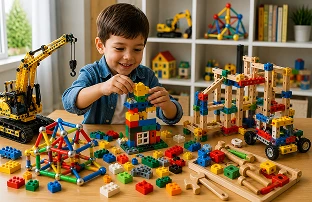
STEM learning toys introduce children to science, technology, engineering, and mathematics through practical activities. Depending on the toy, children may conduct simple experiments, build structures, explore basic mechanics, or discover patterns through interactive challenges.
These activities encourage curiosity by allowing children to test ideas, observe results, and ask questions about how things work. Building kits and beginner science sets can also introduce concepts that children may encounter later in their education.
Creative Learning Toys for Imagination and Expression
Learning does not have to focus entirely on numbers, letters, or scientific concepts. Creative toys such as drawing boards, craft kits, building sets, and pretend-play accessories can also provide valuable learning experiences.
These activities encourage children to express ideas, explore different possibilities, and develop their imagination. Creating pictures, designing structures, or inventing stories can also help children practise decision-making and fine motor coordination.
Choose Learning Toys According to Age and Interests
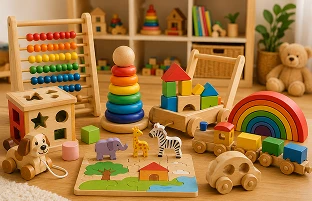
Toddlers may benefit from simple stacking toys, shape sorters, and basic matching activities. Preschoolers may enjoy alphabet puzzles, counting games, and beginner construction sets. Older children may prefer more advanced STEM kits, strategy games, and educational challenges that require planning and independent thinking.
Consider your child's interests alongside their developmental stage. Toys that offer manageable challenges and opportunities for exploration can help maintain engagement over time.Always check the manufacturer's age recommendations and safety information before purchasing a learning toy.
Check Toy Quality and Safety Before Buying
When choosing educational toys, consider the materials, construction, instructions, and suitability for the intended age group. Look for products with durable components and clear guidance for use.
For younger children, avoid toys with small detachable parts that could present choking hazards. Check any electronic components, batteries, or additional materials according to the manufacturer's safety instructions.
Make Learning Toys Part of Everyday Play
Learning toys can become a natural part of children's routines when activities are introduced in a relaxed and enjoyable way. Short play sessions involving puzzles, counting games, creative projects, or building activities can provide opportunities to practise different skills.
Encourage children to ask questions, experiment with different approaches, and explore activities at their own pace. Participating together can make learning more interactive, while independent play allows children to develop their own ideas.
Share